
Our story
RoofLogic and high-performance roof systems
When designing and installing a commercial roof, RoofLogic relies on experience, support and engineered solutions to nominate components, ensuring that the project meets its performance requirements. We evaluate structural, thermal and acoustic performance, and conduct hygrothermal analysis to mitigate condensation risk, mould and corrosion within the roof assembly.
Externally insulated roofs vs conventional roof build-ups
Often referred to as a warm roof, an externally insulated roof places the insulation above the structural roof deck. This creates a continuous thermal layer that improves energy efficiency, reduces thermal bridging and helps manage condensation risk.
Improved energy efficiency
A high-performance roof system helps to prevent heat loss through the roof. This results in lower heating costs during the winter months, lower cooling costs in summer and reduced energy consumption overall.
Management of condensation risk
With a high-performance roof system, the insulation is positioned above the LinerDeck, helping to keep the roof structure warmer and create a continuous thermal layer. A Vapour Control Layer located at the appropriate point in the system build-up limits the movement of warm, moisture-laden internal air into cooler parts of the roof assembly. Together with project-specific hygrothermal analysis and correct detailing, this helps manage condensation risk and reduce the potential for moisture build-up, mould growth and corrosion.
Reduced risk of thermal bridging
Thermal bridging occurs when there is a direct pathway for heat to flow through a building element, bypassing insulation. High-performance roof systems minimise this risk by placing insulation on top of the LinerDeck, creating a continuous barrier. Because the insulation sits externally, high-performance roof systems also provide better thermal performance than cold roofs, helping maintain a more consistent internal temperature and reducing fluctuations in heating and cooling requirements.
Longer lifespan
By minimising the risk of condensation and thermal bridging, high-performance roof systems help extend the lifespan of the roof structure and profiled metal roofing, and reduce maintenance requirements over time.
Lifecycle cost
In addition to lower maintenance expenses, when it comes time to replace a high-performance roof system the TopDeck can be removed and replaced without disrupting the rest of the system. This presents significant savings, as the building can continue to be occupied without the need for tenting and evacuation.
Programme benefits
The high-performance roof system allows for early close-in of the structure. The first process is installation of the LinerDeck, which protects the building interior from the weather — providing both programme and health and safety benefits, particularly compared with installing a traditional cold roof system.
In commercial building construction, high-performance roof systems stand out as the intelligent choice due to their superior thermal performance, enhanced energy efficiency, and increased durability compared to traditional cold roof build-ups.
High-performance roof systems and NCC compliance
The primary feature of a high-performance roof system is the exterior insulation layer, designed to reduce heat loss and maintain a warm, comfortable interior. All RoofLogic roofs and façades are designed and assessed for the applicable NCC requirements, Australian Standards, climate conditions, wind pressures and performance criteria.
High-performance roof systems integrate a Vapour Control Layer on the warm side of the insulation, preventing moisture vapour migrating from the interior into the roof structure. Insulation material — rigid foam boards, mineral wool or glass wool — and its thickness depend on the desired level of thermal performance.
Placing insulation above the roof deck reduces heat loss through the roof, improving energy efficiency and reducing heating costs.
Properly designed high-performance roof systems minimise condensation risk, keeping roof components above the dew point and preventing moisture buildup.
The whole roof structure stays at a relatively warm, stable temperature — minimising thermal stress, prolonging material life and reducing repairs.
Once the LinerDeck is down, the entire roof is trafficable — a practical benefit through the rest of construction.
Mitigating condensation, mould and corrosion
Traditional roof systems are not designed to control vapour drive. Moisture-laden internal air can pass through the roof/ceiling assembly, especially through porous materials like ceiling tiles — causing the dew point to occur within the roof assembly and increasing moisture accumulation over time. This results in reduced thermal performance, mould growth and corrosion risk.
Conventional roof systems typically use poorly performing, discontinuous insulation layers, exacerbating thermal bridging. RoofLogic systems are engineered against this: detailed thermal and hygrothermal analysis for each project establishes a specified system that manages condensation, mould and corrosion risk.
Hygrothermal analysis
'Hygrothermal' refers to the movement of heat and moisture through buildings. Computer-based hygrothermal modelling simulates that movement, generating temperature, water content and relative humidity data within multi-layer building elements.
Simulating building assemblies allows RoofLogic to evaluate and minimise risks such as condensation, moisture entrapment, fungal growth and material degradation — achieving the correct balance between heat and moisture.
Assessments of completed roof installations support our hygrothermal modelling: RoofLogic systems are thermally efficient and completely mitigate condensation.
Acoustic performance of high-performance roof systems
Canterbury Acoustic Testing Services (CATS) and Auckland University Acoustic Testing Services (ATS) have tested RoofLogic high-performance roof systems for airborne sound transmission (ISO 10140-2:2010), noise from artificial rainfall (ISO 140-18:2006), and sound absorption (AS ISO 354-2006).
Commercial buildings often sit in densely developed areas, near airports, highways, industrial zones, or sports and entertainment venues. Roof acoustic performance controls how external noise enters the building, and how noise generated inside — a plant room, an entertainment venue — affects the surrounding area.
Standardised methods measure sound transmission across a range of frequencies into a single STC (Sound Transmission Class) or Rw (Weighted Sound Reduction Index) figure — a higher value means better sound performance.
Rainfall noise is tested by generating artificial rain above a roof assembly and measuring noise from below, expressed as LIAM norm (dB) — lower values mean better rain-noise reduction. Testing follows ISO standards, using a rainfall rig at a simulated rate of 40mm/hr (classified "Heavy"), positioned in three locations.
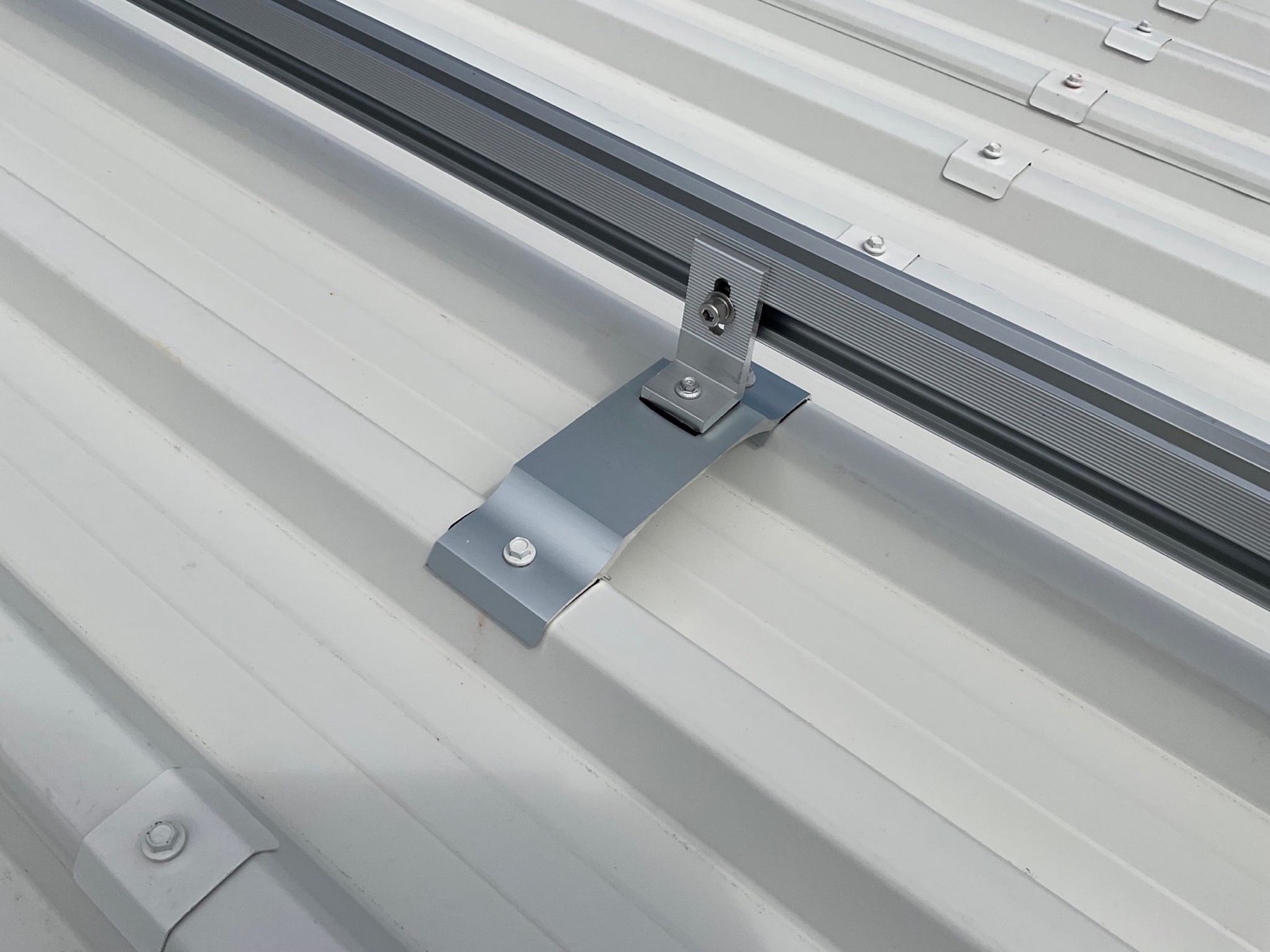
Helios bracket and solar panels
The RoofLogic Helios bracket creates the interface between the PV frame and roof, resolving the weathertightness warranty. It has undergone comprehensive structural testing and is compatible with common roofing profiles.
The PV frame/tripod mechanically attaches to the bracket, so the roofing profile stays unpenetrated by the PV installer — and the design leaves enough space to clean underneath the PV modules as part of routine roof maintenance.
Explore further